
The Beatles and Bourbon: Listening to History One Pour at a Time
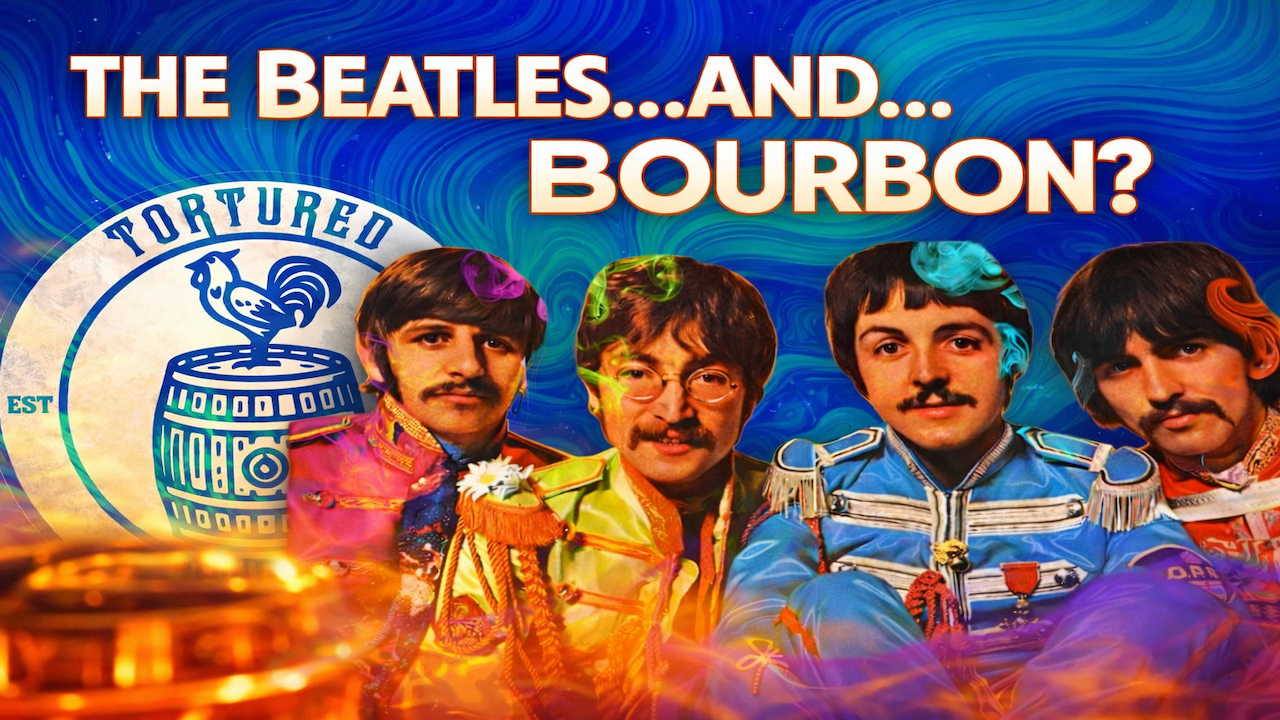
The Beatles and Bourbon
The Beatles and Bourbon: Listening to History One Pour at a Time
There’s a ritual we keep coming back to at Casa de Rooster.
Put a record on.
Pour a drink.
Sit still long enough to actually listen.
Not just to the music itself, but to where it came from, what surrounded it, and how it lands differently depending on who you are when you hear it.
Over time, we realized that’s exactly how we experience bourbon, too.
It’s never just about tasting notes or proof. Bourbon, like music, lives in context — memory, mood, time, and place. A pour can feel completely different depending on what you’re listening to, who you’re with, or what season of life you’re in.
So on this episode of Tortured Bourbon, we tried something new.
We listened through the history of The Beatles, era by era, and paired each phase of their evolution with a bourbon that felt right — not because of marketing or gimmicks, but because the character of the whiskey matched the moment in the music.
What follows isn’t a ranking.
It isn’t a tasting competition.
It’s a shared listening experience.
Era One: The Beginning
Listening Track: Love Me Do (1962)
Bourbon Pairing: Buffalo Trace
The Beatles don’t begin as legends. They begin as kids from Liverpool — a working-class port city shaped by American rock and roll drifting in on ships. Before the charts, before the screaming crowds, before the mythology, there’s repetition and survival.
Hamburg matters because it’s unforgiving. Six- and eight-hour sets. Night after night. If your timing is sloppy, it shows. If your songs don’t connect, people leave. Over time, that kind of environment strips away pretense and sharpens fundamentals.
Love Me Do sounds simple because it is — but it’s simplicity built on hard-earned confidence. Nothing extra. No flash. Just groove, harmony, and feel.
That’s why Buffalo Trace fits here.
It’s not trying to impress you. It doesn’t explain itself. It just works. Approachable, balanced, and quietly confident — the kind of bourbon that invites curiosity rather than demanding attention.
This is the gateway. For the band. For the listener. For the drinker.
Era Two: The Explosion
Listening Track: I Want to Hold Your Hand (1963)
Bourbon Pairing: Buffalo Trace (continued)
This is where everything accelerates.
The Beatles go from successful to unavoidable. Radio. Television. Crowds. Hysteria. A cultural reaction that had no real precedent at the time. And yet, musically, they’re still grounded.
The songs are tighter now. More polished. More deliberate. George Martin’s influence becomes impossible to ignore — not sanding off personality, but shaping it so it can survive the scale.
What’s deceptive about this era is how “normal” it sounds now. That’s only because it worked so completely that it rewrote the rules. Pop music adjusts after this moment.
We stay with Buffalo Trace here because the music hasn’t crossed into experimentation yet. The chaos is external. The fundamentals still hold.
Same bourbon. Bigger spotlight.
Era Three: Intention
Listening Track: We Can Work It Out (1965)
Bourbon Pairing: Four Roses Small Batch Select
This is the pivot.
The fame hasn’t slowed, but something else changes — intent. The Beatles stop reacting to the world and start making decisions for themselves. The music pulls inward. Mood and tone matter more than immediacy.
We Can Work It Out isn’t excitement or fantasy. It’s tension. Compromise. Frustration delivered with restraint. For the first time, the band sounds adult — not darker, just more settled.
Four Roses Small Batch Select mirrors that shift perfectly.
It’s still classic. Still familiar. But the layers reward attention. The complexity isn’t loud. It’s patient. This is where confidence replaces urgency.
Era Four: Technicolor Ambition
Listening Track: All You Need Is Love (1967)
Bourbon Pairing: Maker’s Mark Wood Finishing Series
By 1967, the Beatles aren’t just a band — they’re a cultural engine.
They’ve stopped touring. The studio becomes an instrument. George Martin evolves from producer to translator, helping turn imagination into structure. Experimentation is no longer accidental; it’s guided.
All You Need Is Love isn’t subtle. It’s a broadcast. A statement designed to unify a room on a global scale — and it only works because they’ve earned the trust to pull it off.
The Maker’s Mark Wood Finishing Series fits this moment because it doesn’t abandon tradition — it bends it. One variable at a time. Controlled risk. Coherent results.
This is experimentation that resolves.
Era Five: Fracture
Listening Track: While My Guitar Gently Weeps (1968)
Bourbon Pairing: Garrison Brothers Balmorhea
The optimism fades. The unity cracks.
The White Album isn’t peaceful — it’s productive under tension. Collaboration loosens. Individual voices assert themselves. George Harrison steps fully into his own, delivering a song that feels observational, resigned, and quietly devastating.
This isn’t rage. It’s clarity.
Balmorhea belongs here because it doesn’t smooth itself out to meet expectations. Texas climate. Texas grain. Texas patience. The environment shapes the whiskey whether you want it to or not.
Just like this album, you can’t separate the product from the people who made it.
Era Six: Resolution
Listening Tracks: Get Back, Abbey Road Medley (1969)
Bourbon Pairing: Heaven Hill 19 Year
The final turn isn’t reinvention. It’s restraint.
Get Back is an attempt to remember what it felt like to be a band again. The rooftop concert proves the chemistry still exists — but it’s recognition, not reset.
Then comes Abbey Road. Controlled. Deliberate. Professional.
The medley is editorial maturity — fragments stitched together into something whole. And when it ends, it really ends.
“And in the end, the love you take is equal to the love you make.”
Heaven Hill 19 Year fits because nothing here is rushed. Time does the work. Experience shapes the result. There’s no noise left — only intention.
This isn’t nostalgia.
It’s resolution.
Final Thoughts
This episode wasn’t about proving anything.
It wasn’t about rankings or absolutes.
It was about slowing down long enough to listen — to music, to bourbon, and to the way time shapes both.
If you played along at home, poured a drink, and listened with us, then in a strange way… we were all listening together.
Cheers. 🥃🎶
